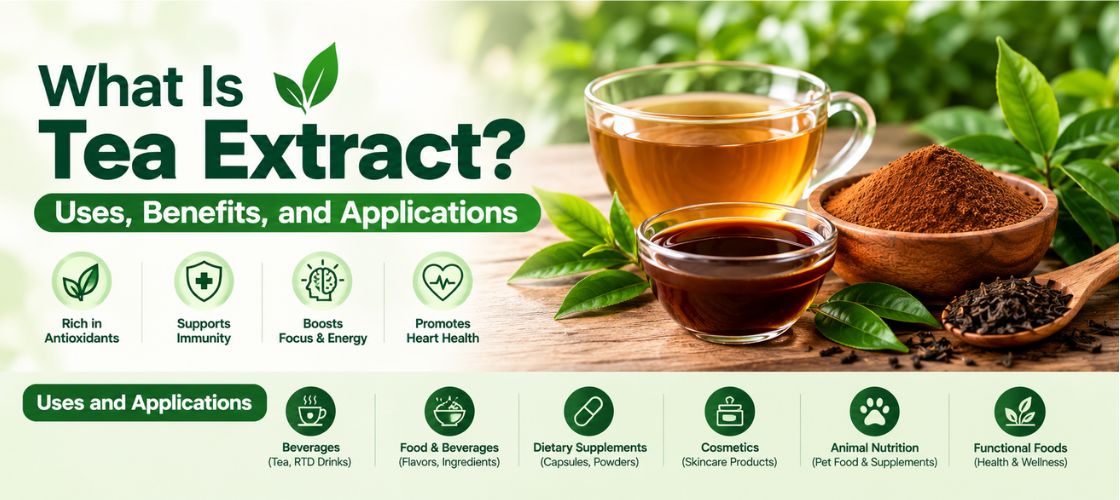
Tea extract is a concentrated ingredient derived from tea leaves and used across beverage, food, and wellness formulations. It captures selected tea compounds in a convenient format for commercial applications. Depending on the tea source and extraction process, tea extracts can provide different flavor, color, aroma, and compositional characteristics.
What is Tea Extract?
Tea extract is produced by extracting soluble compounds from processed tea leaves. An instant tea extract supplier can provide the resulting ingredient in liquid or powdered formats for different applications.
Tea extracts can vary based on:
- Tea source: Black, green, white, and other tea varieties produce different profiles.
- Flavor: The source tea influences taste and aroma.
- Color: Extracts can contribute color to finished products.
- Concentration: The level of extracted solids can vary by application.
- Format: Extracts may be supplied as liquids or dry powders.
These characteristics allow manufacturers to select an extract according to their finished-product requirements.
How Is Tea Extract Made?
Tea extract production involves separating soluble compounds from tea leaves and processing the resulting extract into a suitable format.
A general process includes:
- Tea selection: Choose tea leaves based on the desired product profile.
- Preparation: Process the leaves for extraction.
- Extraction: Extract soluble tea compounds using a controlled process.
- Filtration: Remove insoluble material from the extracted liquid.
- Concentration: Reduce the liquid volume when required.
- Drying or finishing: Convert the extract into a suitable format, such as a powder.
- Quality testing: Check the finished ingredient against defined specifications.
The extraction and finishing methods influence the characteristics of the final tea extract.
Types of Tea Extracts
Tea extracts can be produced from different tea varieties, with each offering a distinct sensory and compositional profile.
Common types include:
- Green tea extract: Derived from green tea leaves for beverage, food, and wellness formulations.
- Black tea extract: Made from black tea and valued for its characteristic color, aroma, and robust flavor.
- White tea extract: Derived from minimally processed tea leaves for selected beverage and specialty applications.
- Other tea-based extracts: Custom extracts can be developed from different tea sources according to application requirements.
The choice depends on the finished product’s flavor, color, concentration, and formulation needs.
Tea Extract Benefits
Tea extracts offer formulation benefits for manufacturers developing commercial food and beverage products. Their concentrated format can simplify ingredient handling while providing consistent tea characteristics.
Key tea extract benefits include:
- Consistent flavor: Standardized extracts can help maintain a defined tea profile across batches.
- Concentrated format: Extracts provide tea characteristics in a compact ingredient format.
- Application flexibility: They can be incorporated into different food and beverage formulations.
- Color contribution: Certain extracts can contribute tea-derived color to finished products.
- Easy incorporation: Liquid and powdered formats can suit different production requirements.
- Product development: Extracts provide flexibility when creating tea-based products.
The specific characteristics depend on the tea source, extraction method, concentration, and final format.
Tea Extract Uses and Applications
Tea extracts are used across several commercial categories because they can provide tea flavor, color, and aroma in a convenient ingredient format. Tea extract uses, category-wise, are as follows:
Tea Extract Uses in Beverages
Tea extracts can simplify the development of ready-to-use and concentrated beverage products.
- Ready-to-drink teas
- Instant tea beverages
- Tea-based premixes
- Beverage concentrates
- Flavored tea drinks
These formats allow manufacturers to incorporate tea characteristics without preparing tea leaves during final production.
Tea Extract Uses in Food Products
Tea extracts can be incorporated into food products where tea flavor, color, or aroma supports the formulation.
- Bakery products
- Confectionery
- Desserts
- Dairy-based products
- Flavor systems
The right extract depends on processing conditions and the desired finished-product profile.
Tea Extract Uses in Nutraceutical and Wellness Products
Tea extracts are also used in products built around tea-derived ingredients.
- Dietary supplement formulations
- Functional beverages
- Powdered wellness mixes
- Tea-based nutrition products
Manufacturers should select extracts based on their intended composition, specifications, and applicable regulatory requirements.
Tea Extract Uses in Other Industries
Tea extracts can support applications beyond conventional food and beverage products.
- Flavor systems
- Ingredient blends
- Specialty formulations
- Custom product development
The application determines the required extract format, concentration, stability, and quality specifications.
How to Choose the Right Tea Extract?
Choosing the right tea extract starts with the finished product’s requirements.
- Tea type: Match the extract with the desired tea profile.
- Extraction method: Consider how it affects the ingredient.
- Concentration: Select a level suited to the formulation.
- Format: Choose liquid or powder based on production needs.
- Flavor and color: Check that the extract matches the finished product.
- Quality specifications: Review consistency, testing, and documentation.
- Supplier capability: Consider customization, capacity, and application support.
A clear specification helps businesses select an extract that fits both the product and production process.
Starlon Naturals: Tea Extract Manufacturer and Supplier
Starlon Naturals provides tea extracts and beverage ingredients for B2B applications, supporting cafés, beverage brands, food service businesses, and commercial retailers. As a Speciality Tea manufacturer, it supports businesses seeking tea-based ingredients for various commercial applications.
- Tea extract range: Tea extracts and specialty tea ingredients for different applications.
- Custom development: Custom blend development tailored for beverage and food service applications.
- Batch consistency: Consistent high-yield flavor extracts and standardized batch stability.
- B2B supply: Ingredient solutions designed around commercial formulation needs.
- Product flexibility: Options across tea, coffee, extracts, chicory, and premixes.
These capabilities support businesses working toward defined flavor profiles and consistent production requirements.
Conclusion
Tea extract provides a concentrated way to incorporate tea characteristics into commercial products. A Green Tea Extracts exporter can supply extracts derived from different tea varieties in liquid or dry formats. Its uses span beverages, food products, nutraceutical formulations, and specialty applications. Choosing the right extract requires attention to tea type, extraction method, concentration, format, quality, and intended use. Defining these requirements helps businesses develop tea-based products with consistent specifications.
Frequently Asked Questions
1. What are the benefits of tea extract?
Tea extract can provide concentrated tea characteristics, consistent flavor, flexible application options, and easy incorporation into commercial formulations.
2. What is the difference between tea extract and brewed tea?
Tea extract is a concentrated ingredient produced through extraction, while brewed tea is a finished beverage prepared by steeping tea leaves.
3. What are the different types of tea extracts?
Common types include green tea extract, black tea extract, white tea extract, and other tea-based extracts.
4. Where are tea extracts commonly used?
Tea extracts are used in beverages, food products, nutraceutical and wellness formulations, flavor systems, and specialty ingredient applications.
5. How should businesses choose a tea extract supplier?
Businesses should assess tea type, extraction method, concentration, format, quality specifications, consistency, documentation, customization, and supply capabilities.
