

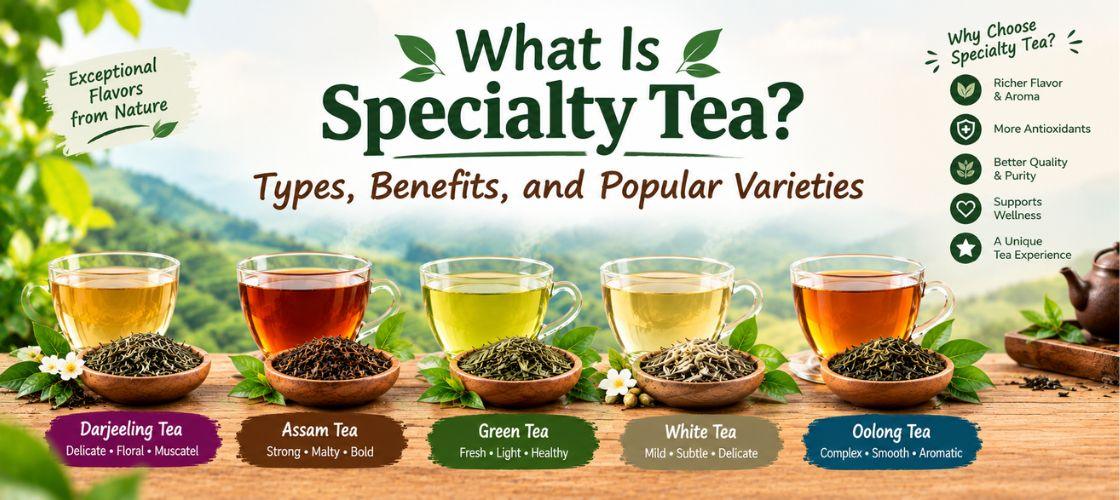
Tea can be more than a familiar everyday beverage. Some teas stand out because of where they are grown, how the leaves are cultivated, and the care taken during processing. These factors can create distinctive flavors, aromas, appearances, and drinking experiences. This is where specialty tea comes in, with greater attention to origin, leaf quality, craftsmanship, and sensory character. Understanding specialty tea can help consumers and businesses recognize its key characteristics and identify varieties suited to different preferences and beverage applications, including tea extracts sourcing for commercial formulations.
What is Specialty Tea?
Specialty tea is selected and produced with attention to origin, cultivation, harvesting, processing, and flavor.
Key characteristics include:
- Origin: The growing region can influence flavor and aroma.
- Cultivation: Growing conditions and agricultural practices affect leaf development.
- Harvesting: Timing and leaf selection can influence the final profile.
- Processing: Withering, rolling, oxidation, and drying shape the tea’s character.
- Flavor profile: Specialty teas can offer floral, fruity, earthy, smoky, or malty notes.
- Craftsmanship: Careful handling helps preserve desired characteristics.
These factors give specialty tea a defined identity beyond the basic tea category.
What Makes Specialty Tea Different?
Specialty tea differs through the attention given to the ingredient from cultivation to finished product. Origin, harvesting, processing, and craftsmanship can influence its final characteristics.
The key factors include:
- Tea origin: Soil, climate, elevation, and regional conditions can influence flavor.
- Cultivation: Farming practices and plant varieties contribute to leaf characteristics.
- Harvesting: Selective harvesting can focus on specific leaves and buds.
- Processing: Processing methods influence oxidation, aroma, color, and taste.
- Craftsmanship: Skilled handling helps maintain the intended sensory profile.
- Quality control: Sorting, grading, and storage help preserve quality.
These factors give beverage developers more options when creating distinct tea products.
Specialty Tea Types
Specialty tea covers different categories, each offering distinct processing methods and sensory characteristics.
Specialty Green Tea
Produced with limited oxidation, green tea retains a fresh profile. Varieties can offer vegetal, nutty, grassy, or subtly sweet notes.
Specialty Black Tea
Greater oxidation gives black tea deeper color and fuller flavor. Profiles can include malty, fruity, floral, or brisk notes.
Specialty White Tea
Made from young leaves and buds with minimal processing, white tea has a delicate appearance and subtle flavor.
Specialty Oolong Tea
Positioned between green and black tea in oxidation, oolong can offer floral, creamy, roasted, or fruity notes.
Specialty Herbal and Flavored Teas
Herbal teas use flowers, herbs, spices, and fruits. Flavored teas can combine tea leaves with botanicals and other ingredients.
These specialty tea types give businesses flexibility when developing beverages and tea products.
Premium Tea Varieties: Popular Examples
Premium tea varieties can be distinguished by origin, cultivar, harvest, processing method, or sensory profile. Popular examples include:
- Darjeeling: Teas from the Darjeeling region can vary across seasonal flushes.
- Assam: Teas from Assam, known for fuller profiles.
- Matcha: A powdered green tea traditionally associated with Japan.
- Oolong: Offers varied profiles based on oxidation and processing.
- White tea: Valued for its delicate character and minimal processing.
- Specialty green teas: Regional varieties offer different flavor and aroma characteristics.
Origin, processing, quality, and intended use all influence the finished ingredient.
Specialty Tea Benefits and Characteristics
Specialty tea offers businesses a range of sensory characteristics for differentiated beverage products.
Important characteristics include:
- Distinctive flavor and aroma profiles
- Different leaf grades and appearances
- Origin-specific characteristics
- Seasonal and processing variations
- Flexibility across hot and cold beverages
- Options for blends and specialty formulations
These characteristics provide flexibility when developing products around a defined sensory experience.
How Is Specialty Tea Produced?
Specialty tea production involves several stages, with the process varying by tea category.
- Cultivation: Tea plants are grown under specific regional conditions.
- Harvesting: Pick leaves and buds according to the desired tea style.
- Withering: Fresh leaves may lose moisture before further processing.
- Rolling: Leaves can be rolled or shaped to support processing.
- Oxidation: Controlled exposure to air develops color, flavor, and aroma in teas that require oxidation.
- Drying: Heat reduces moisture and stabilizes the processed leaves.
- Grading: Finished tea may be sorted by leaf size and appearance.
- Packaging: Proper packaging helps protect the tea during storage and distribution.
Each stage can influence the final flavor, aroma, appearance, and consistency.
How to Choose the Right Specialty Tea
Choosing the right specialty tea starts with defining your finished-product requirements.
Consider these factors:
- Tea type: Choose between green, black, white, oolong, herbal, or flavored tea.
- Origin: Consider whether a specific region matters.
- Flavor profile: Define the desired notes, strength, aroma, and finish.
- Processing method: Match processing characteristics with the beverage.
- Quality: Review leaf appearance, grade, consistency, and specifications.
- Application: Consider brewed beverages, blends, concentrates, or specialty products.
- Supply requirements: Evaluate batch consistency, documentation, customization, and availability.
A clear product brief makes it easier to match the tea with the desired application.
Starlon Naturals: Specialty Tea Supplier
For businesses sourcing specialty tea, the right supplier should offer quality ingredients, consistency, and application-focused solutions. Starlon Naturals is a black tea extract bulk supplier that supports B2B buyers with tea and specialty beverage ingredients for cafés, food service businesses, retailers, and beverage brands.
Key capabilities include:
- Specialty tea options: Loose tea, custom specialty tea blends, and instant tea extracts.
- Batch consistency: Consistent high-yield flavor extracts and standardized batch stability for repeatable formulations.
- Custom blends: Custom blend development tailored for beverage and food service applications.
- B2B solutions: Tea ingredients designed for commercial beverage development and food service applications.
These capabilities give businesses flexibility when developing specialty tea products with defined flavor and formulation requirements.
Conclusion
Specialty tea combines attention to origin, cultivation, harvesting, processing, and sensory quality. Its range includes green, black, white, oolong, herbal, and flavored teas, along with varieties such as Darjeeling and Assam. Businesses can select specialty tea based on flavor, origin, processing, quality, and application to create products with a clear sensory direction. For tailored specialty tea options and commercial ingredient solutions, connect with Starlon Naturals to discuss your requirements.
FAQs
1. What are some popular premium tea varieties?
Popular examples include Darjeeling, Assam, Matcha, Oolong, White Tea, and specialty green teas from different regions.
2. What are the benefits of specialty tea?
Specialty tea provides a range of flavor, aroma, origin, and processing characteristics, giving beverage developers more formulation options.
3. How is specialty tea produced?
Production can include cultivation, harvesting, withering, rolling, oxidation, drying, grading, and packaging. The process depends on the tea type.
4. How can businesses choose the right specialty tea supplier?
Businesses should assess tea origin, quality, flavor profile, processing, supply consistency, documentation, customization options, and suitability for their application.
