
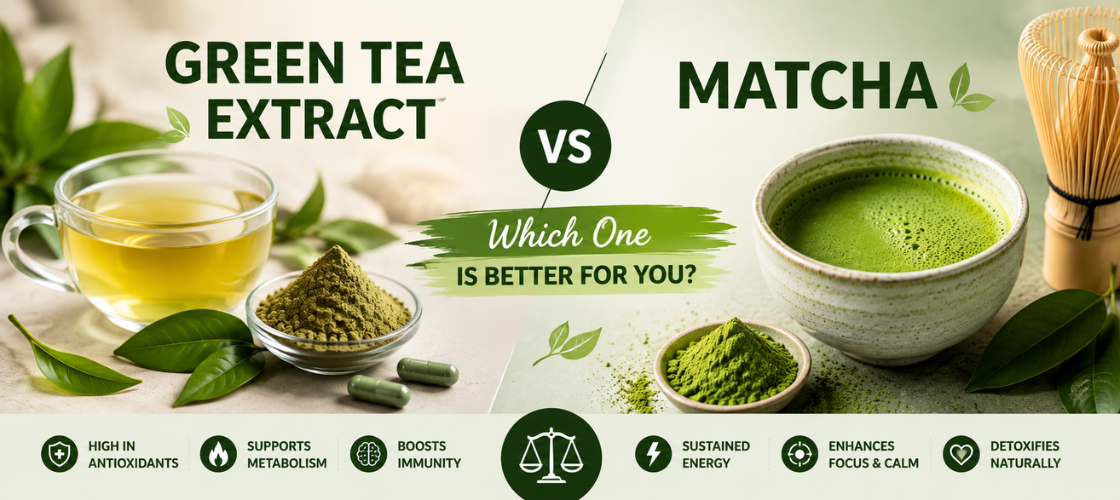
Green tea has captured the attention of wellness seekers everywhere, but when it comes to choosing between matcha and green tea extract, the answer is not always obvious. Do you want the bold, earthy ritual of matcha, or the concentrated convenience and versatility of green tea extract? Although both come from the same plant, Camellia sinensis, they differ in flavor, nutrient concentration, preparation, and how they fit into daily life. Exploring green tea extract vs matcha can help consumers, manufacturers, and product developers make a smarter choice based on their goals. Matcha appeals to those who enjoy a traditional tea experience with a rich taste, while green tea extract is prized for its potency, consistency, and wide use in supplements, functional foods, beverages, and nutraceutical formulations.
Green Tea and Matcha
The comparison between green tea extract vs matcha begins with a shared origin. Both products are derived from green tea leaves supplied by a Green Tea manufacturer and contain beneficial compounds such as catechins, polyphenols, and antioxidants. However, differences in cultivation, processing, concentration, and usage create unique advantages for each. Matcha is consumed as a powdered tea beverage, while green tea extract is a concentrated ingredient commonly used in commercial applications. Both have gained popularity among health-conscious consumers seeking natural wellness solutions. A tea manufacturer plays an important role in producing and supplying these tea-based ingredients for various applications.
What is Green Tea Extract?
Green tea extract is a concentrated ingredient produced by extracting beneficial compounds from green tea leaves. The resulting extract contains standardized levels of catechins, particularly epigallocatechin gallate (EGCG), making it suitable for various food, beverage, nutraceutical, and personal care products.
Key characteristics of green tea extract include:
- High concentration of catechins and polyphenols
- Available in powder, liquid, and encapsulated forms
- Commonly used in dietary supplements
- Suitable for functional beverages and nutritional products
- Easy to standardize for consistent performance
- Associated with numerous green tea extract benefits, including antioxidant support and metabolic wellness
At Starlon Naturals, Green Tea Extract is produced to meet the quality and consistency requirements of global manufacturers across multiple industries.
What is Matcha?
Matcha is a finely ground powder made from specially cultivated green tea leaves supplied by a Speciality Tea manufacturer. Before harvest, tea plants are shaded for several weeks, encouraging the development of chlorophyll, amino acids, and flavor compounds. The leaves are then steamed, dried, and stone-ground into a vibrant green powder.
Examples of matcha applications include:
- Traditional Japanese tea preparation
- Matcha lattes
- Smoothies and wellness beverages
- Bakery products and desserts
- Ice cream and confectionery
- Functional food formulations
The growing popularity of matcha benefits stems from its unique flavor, rich nutrient profile, and cultural significance.
Key Differences Between Green Tea Extract and Matcha
Although green tea extract and matcha come from the same tea plant, they differ in cultivation, concentration, preparation, and flavor.
| Aspect | Green Tea Extract | Matcha |
|---|---|---|
| Cultivation and processing | Extracted and standardized from green tea leaves. | Shade-grown leaves are steamed, dried, and stone-ground into a fine powder. |
| Nutrient concentration | Higher concentration of targeted compounds such as EGCG and catechins. | Contains whole-leaf nutrients, including chlorophyll, amino acids, antioxidants, and caffeine. |
| Preparation and consumption | Commonly used in capsules, tablets, beverages, powders, and fortified products. | Typically whisked into hot water or added to recipes and drinks. |
| Flavor profile | Mild to neutral in finished products. | Grassy, slightly sweet, and umami. |
| Price and availability | More scalable and generally cost-effective for manufacturing. | Often more expensive, especially ceremonial-grade varieties. |
Health Benefits of Green Tea Extract and Matcha
Both ingredients are valued for their antioxidant content and wellness benefits, making them popular for antioxidant protection, heart health, weight management, cognitive support, metabolic health, and overall wellness.
Antioxidant Power
Both products are rich in polyphenols and catechins. Green tea extract often provides a higher concentration of EGCG, while matcha delivers antioxidants from the entire tea leaf. These compounds help combat oxidative stress and support cellular health.
Heart Health
Research suggests that the antioxidants found in both matcha and green tea extract may support healthy cholesterol levels, blood vessel function, and overall cardiovascular wellness when combined with healthy lifestyle habits from a green tea extract supplier.
Weight Management
Both ingredients are commonly used in wellness products aimed at supporting metabolism and fat oxidation. Green tea extract is often preferred in supplements because of its concentrated catechin content, while matcha is popular among consumers seeking a natural beverage option.
Mental Alertness and Relaxation
Matcha contains caffeine and L-theanine, creating a combination associated with calm focus and sustained energy. Green tea extract may also support cognitive function, depending on its formulation and caffeine content.
Other Benefits
Additional areas of interest include skin health, exercise recovery, healthy aging, and blood sugar management. Ongoing research explores how tea-derived compounds may support overall wellness.
Which One Should You Choose?
The choice between green tea extract vs matcha depends largely on your goals and intended use.
Choose matcha if you:
- Enjoy preparing and drinking tea
- Prefer consuming the whole tea leaf
- Appreciate traditional tea experiences
- Want a flavorful beverage ingredient
Choose green tea extract if you:
- Need a concentrated source of catechins
- Prefer supplements or functional products
- Are developing commercial formulations
- Require standardized active compounds
For manufacturers and product developers, working with a tea extract manufacturer offers greater flexibility, consistency, and scalability across multiple applications.
Conclusion
When comparing green tea extract vs matcha benefits, neither option is universally better. Matcha provides a traditional, nutrient-rich tea experience, while green tea extract delivers concentrated bioactive compounds that support a wide range of functional applications. The right choice depends on personal preferences, wellness goals, and product requirements. At Starlon Naturals, we supply premium Green Tea Extracts that help brands and manufacturers create high-quality products for global markets while meeting growing consumer demand for plant-based wellness ingredients.
FAQs
Can I substitute matcha with green tea extract in recipes?
It depends on the recipe. Matcha contributes flavor, color, and texture, while green tea extract primarily provides concentrated functional compounds and may not deliver the same sensory characteristics.
How much matcha or green tea extract should I consume daily?
The appropriate amount varies based on product type, concentration, and individual health considerations. Always follow manufacturer recommendations or seek professional guidance.
How should I store matcha and green tea extract to maintain freshness?
Both should be stored in airtight containers away from heat, moisture, light, and strong odors to preserve quality and stability.
Is matcha better than green tea extract for weight loss?
Green tea extract often contains higher concentrations of catechins used in weight management products, while matcha offers a whole-food approach with additional nutrients and flavor benefits.

