
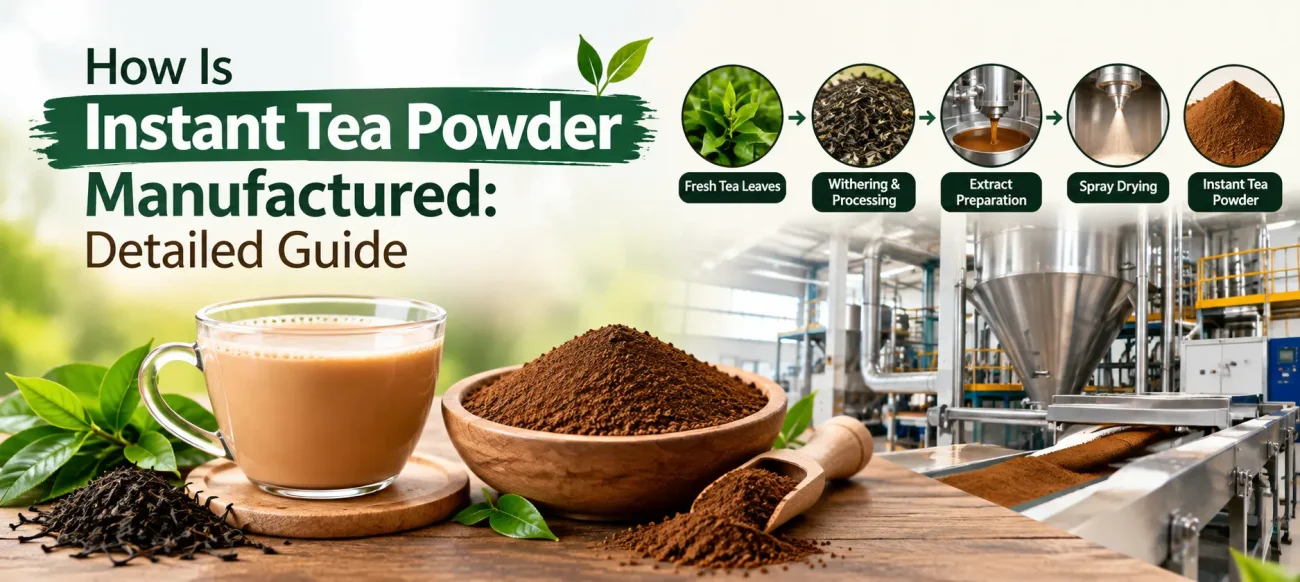
Instant tea powder is produced through a controlled manufacturing process that converts tea leaves into a soluble, ready-to-use ingredient. The process is designed to retain the tea’s characteristic flavor, aroma, color, and soluble compounds while making them easy to reconstitute in water. Understanding how instant tea is made involves looking at each stage, from tea leaf selection and extraction to concentration, drying, and final quality control. This process also determines the characteristics and applications of the finished instant tea powder.
What is Instant Tea Powder?
Instant tea powder is a soluble tea product made by extracting water-soluble components from tea leaves and converting the liquid extract into a dry powder. Unlike conventional tea leaves, it can be mixed directly with water. Instant tea is used in applications such as tea premixes, ready-to-drink beverages, iced tea, and other food and beverage formulations.
How Is Instant Tea Made?
Instant tea is produced through a series of controlled processing stages that convert selected tea leaves into a soluble, stable powder.
Selection and Preparation of Tea Leaves
The process begins with selecting tea based on its variety, origin, grade, flavor profile, and intended application. Both black and green tea can be used to produce instant tea. The quality of the starting tea influences the flavor, aroma, color, and soluble compounds of the final product.
Extraction of Tea Solubles
The prepared tea is extracted with water to obtain soluble compounds that contribute to its flavor, color, aroma, and body. Factors such as water temperature, extraction time, tea-to-water ratio, and processing conditions affect the resulting extract.
Filtration and Clarification
The extracted tea liquid may contain fine particles and other insoluble material. Filtration and clarification remove these components, improving the extract’s clarity, stability, and consistency.
Concentration of Tea Extract
The clarified extract is concentrated by removing part of its water content. Vacuum concentration may help manage heat exposure while producing a stronger extract suitable for drying.
Drying the Tea Extract
The concentrated extract is converted into powder using methods such as spray drying, freeze drying, or vacuum drying.
Spray drying turns the liquid extract into fine droplets that are rapidly dried with hot air and is widely used for commercial production. Freeze drying removes water from a frozen product under reduced pressure and can help retain heat-sensitive components, although it is generally more expensive.
Blending, Standardization, and Packaging
After drying, the powder may be blended or standardized to achieve the required flavor, color, strength, or solubility. It is then packed in suitable protective packaging to help maintain quality during storage and transportation, ensuring it meets the requirements of a reliable Coffee supplier in India.
At Starlon Naturals, we offer application-specific instant tea extract powders for different beverage formats, including hot-water and cold-water applications.
Read More: Darjeeling Tea Guide
Types of Instant Tea Powder
Instant tea powder comes in several forms, each offering distinct flavor, color, solubility, and application characteristics.
Instant Black Tea Powder
Instant black tea powder is produced from black tea and is valued for its characteristic flavor and color. It can be used in hot beverages, tea premixes, ready-to-drink products, and other commercial applications.
Instant Green Tea Powder
Instant green tea powder is made from green tea and generally offers a lighter, fresher flavor profile. It can be used in beverages, premixes, and formulations that require green tea characteristics. For businesses sourcing tea extracts, working with a reliable Black Tea Extracts exporter can help ensure consistent quality and suitable product specifications.
What Factors Affect the Quality of Instant Tea Powder?
Several factors can influence the quality of the finished powder:
- Raw tea quality: Origin, variety, grade, and freshness affect the starting profile.
- Extraction: Temperature, time, and extraction conditions influence the soluble compounds recovered.
- Clarification: Effective filtration can improve clarity and stability.
- Drying: The drying method affects moisture, solubility, aroma, and powder characteristics.
- Solubility: The powder should perform as required for its intended application.
- Moisture control: Appropriate moisture levels help maintain stability during storage.
- Packaging: Protective packaging helps limit exposure to moisture, oxygen, light, and contamination.
- Consistency: Commercial buyers should consider batch-to-batch consistency in flavor, color, strength, and solubility.
Instant Tea Powder vs Traditionally Brewed Tea
The main difference is how the tea is prepared. Traditional tea requires steeping leaves, while instant tea is processed into a soluble format.
| Feature | Instant Tea Powder | Traditional Tea |
|---|---|---|
| Preparation | Mix with water | Steep tea leaves |
| Convenience | Quick and consistent | Requires brewing time |
| Solubility | Designed to dissolve | Leaves remain separate |
| Format | Powder or soluble extract | Whole, broken leaf, or dust |
| Applications | Premixes, RTD beverages, food products | Home and foodservice brewing |
Applications of Instant Tea Powder
Instant tea powder can be used in:
- Tea premixes
- Ready-to-drink beverages
- Iced tea
- Vending beverages
- Hot beverage mixes
- Functional beverages
- Bakery and confectionery products
The appropriate format depends on the required solubility, flavor strength, application, and processing conditions.
How to Choose a Reliable Instant Tea Manufacturer?
For commercial sourcing, consider:
- Raw material: Check the tea origin, variety, grade, and quality.
- Processing capabilities: Understand the manufacturer’s extraction, clarification, concentration, and drying processes.
- Solubility: Confirm whether the powder suits hot, ambient, or cold-water applications.
- Consistency: Look for reliable specifications and batch-to-batch performance.
- Customization: Consider whether the manufacturer can adapt the product to your application.
- Documentation: Certifications, specifications, and traceability can provide additional assurance.
At Starlon Naturals, we supply hot-water-soluble and cold-water-soluble black instant tea extract powders. As a trusted tea extract exporter, our hot-water-soluble extracts dissolve quickly in hot water, while cold-water-soluble extracts are designed for cold or ambient water applications without sediment or turbidity.
Related Read: Tea Extract Benefits
Conclusion
Instant tea powder is manufactured by extracting tea’s soluble components and converting the resulting extract into a convenient powder. The process generally involves tea selection, extraction, clarification, concentration, drying, standardization, and packaging. For commercial buyers, the right instant tea depends on the intended application, solubility, flavor profile, processing requirements, and batch-to-batch consistency.
FAQs
1. How is instant tea made?
Instant tea is generally made by extracting soluble compounds from processed tea leaves, filtering and concentrating the extract, and drying it into a soluble powder.
2. What tea leaves are used to make instant tea?
Both black and green tea can be used to produce instant tea. The choice depends on the desired flavor, color, application, and product specifications.
3. How is tea extract converted into instant tea powder?
A concentrated tea extract is dried using methods such as spray drying, freeze drying, or vacuum drying to remove moisture and create a soluble powder.
4. What factors affect the quality of instant tea powder?
Raw tea quality, extraction, clarification, drying, solubility, moisture control, packaging, and storage can all influence the finished product.
5. What are the common applications of instant tea powder?
Instant tea powder is used in tea premixes, ready-to-drink beverages, iced tea, vending beverages, functional beverages, and other food and beverage formulations.

