
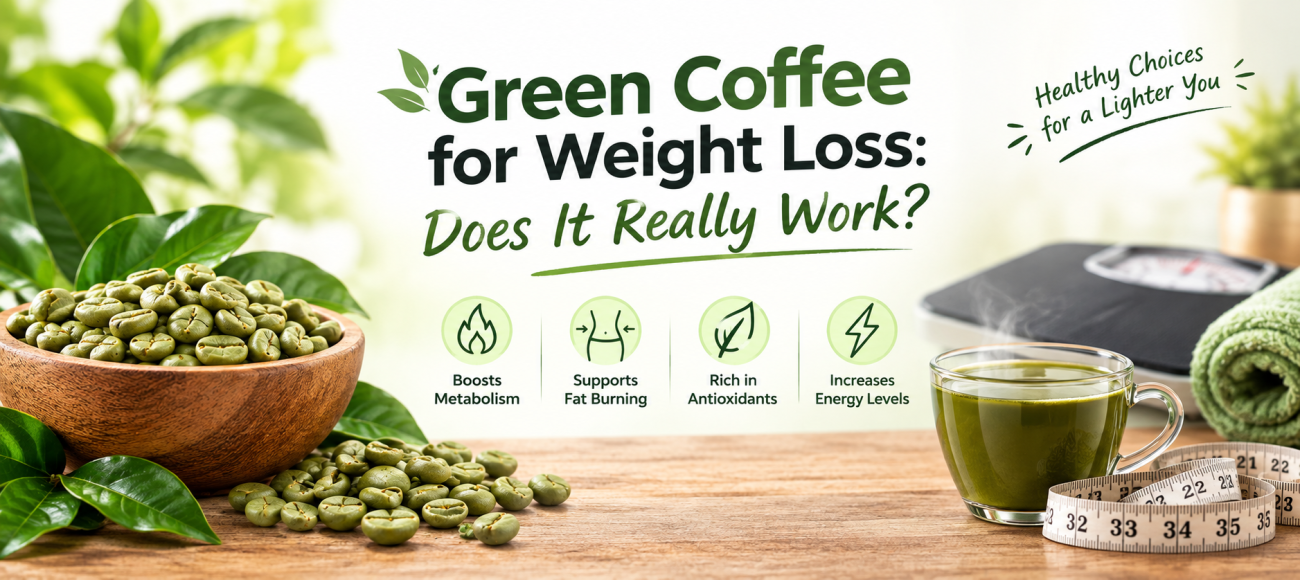
Green coffee has emerged as an ingredient of interest in weight-management discussions, largely because of its naturally occurring chlorogenic acids. These compounds are present in unroasted coffee beans and are studied for their potential influence on glucose metabolism, fat metabolism, and body weight. Unlike roasted coffee, green coffee undergoes no roasting process, helping preserve a higher concentration of chlorogenic acids. Exploring the available evidence can help clarify what green coffee weight loss claims are supported by research and where expectations should remain realistic.
What is Green Coffee?
Green coffee refers to coffee beans that have not undergone roasting. Without roasting, the beans retain more naturally occurring chlorogenic acids and have a milder, more herbal flavor than roasted coffee.
Green coffee beans are available in varieties such as Arabica and Robusta and can be used for roasting, extraction, functional beverages, and other applications. Nutritional and chemical composition can vary by bean variety, origin, processing, and preparation, so choosing a reliable coffee supplier is important for consistent quality.
How Green Coffee May Support Weight Loss
The potential link between green coffee and weight management mainly involves chlorogenic acids and caffeine.
Role of Chlorogenic Acids
Chlorogenic acids are naturally occurring polyphenols found in coffee beans. Green coffee generally retains more of these compounds because roasting can reduce their levels.
Research has investigated whether chlorogenic acids may influence glucose metabolism and body weight. A 2023 systematic review and meta-analysis found that green coffee bean extract containing chlorogenic acids was associated with reduced body weight. However, the analysis included only three randomized controlled trials involving 103 participants and noted the limited sample size and short study duration.
Green Coffee and Metabolism
Green coffee contains caffeine, which is a stimulant that can temporarily increase alertness and energy expenditure. This makes caffeine relevant when researchers study coffee and metabolism, while a tea manufacturer in India may focus on similar ingredient considerations for tea-based products.
However, caffeine alone does not make green coffee a weight-loss product. Individual responses vary, and caffeine content depends on the coffee variety, preparation, and serving size.
Green Coffee and Fat Metabolism
Some studies have explored whether chlorogenic acids in green coffee can influence fat metabolism and body composition. Research has reported changes in measures such as body weight, BMI, and abdominal fat in some groups.
These findings are interesting but should be interpreted carefully. Studies differ in formulation, dose, duration, and participant groups, so they do not establish that green coffee directly burns body fat.
Read More: Green Tea Extract vs Matcha
Green Coffee for Weight Loss: What Does Research Say?
Research suggests that green coffee extract may support modest improvements in weight management when used alongside a balanced diet and regular physical activity. A 2019 systematic review and meta-analysis of randomized controlled trials found a small reduction in BMI among people taking green coffee extract. However, the overall reduction in body weight was not statistically significant.
A 2023 systematic review and meta-analysis also reported reduced body weight among participants consuming green coffee bean extract containing at least 500 mg of chlorogenic acids per day. However, the researchers noted that the available studies were limited in number, involved relatively few participants, and were generally short-term.
Green Coffee vs Roasted Coffee for Weight Management
Green coffee and roasted coffee differ mainly in processing, which affects their composition, flavor, and potential applications.
| Feature | Green Coffee | Roasted Coffee |
|---|---|---|
| Processing | Unroasted beans | Heat-processed beans |
| Chlorogenic acids | Generally higher | Some decrease during roasting |
| Flavor | Mild and herbal | Rich and aromatic |
| Primary use | Extracts, beverages, roasting | Brewed and ready-to-drink coffee |
| Weight research | Studied for potential modest effects | Mainly studied for caffeine and coffee |
| Key consideration | Varies by bean, origin, and processing | Varies by roast, bean, and brewing method |
Factors to Consider Before Consuming Green Coffee
Green coffee can fit into a balanced lifestyle, but its caffeine content makes mindful consumption important.
- Monitor your individual caffeine tolerance, as excessive intake may cause nervousness, sleep problems, increased heart rate, or digestive discomfort.
- The FDA states that up to 400 mg of caffeine per day is not generally associated with negative effects for most adults, although sensitivity varies.
- Consider caffeine from all sources, including coffee, tea, energy drinks, supplements, and other products.
- If you are pregnant, breastfeeding, taking medications, or have a health condition that may be affected by caffeine, consult a healthcare professional before increasing your intake.
By considering your total caffeine intake and personal health needs, you can make a more informed decision about consuming green coffee.
Starlon Naturals: Green Coffee Bean Supplier in India
At Starlon Naturals, we supply high-quality unroasted green coffee beans for diverse commercial applications:
- Arabica and Robusta varieties sourced from certified farms across India’s major coffee-growing regions and selected international origins
- Thorough cleaning, grading, and sorting to support consistent quality
- Origin documentation, farm audit reports, and quality certificates provided with shipments
- Suitable for roasting, green coffee extracts, nutraceutical formulations, functional beverages, and private-label products
Our green coffee beans offer businesses a reliable, traceable raw material for developing and manufacturing coffee-based products.
Related Read: Green Tea Benefits
Conclusion
Green coffee is an ingredient of interest in weight-management research, particularly for its chlorogenic acid content. While available studies indicate potential modest effects, more robust research is needed to establish its effectiveness. Its suitability ultimately depends on how it is sourced, processed, and incorporated into a product or daily routine. Starlon Naturals is a Green Coffee Beans supplier offering Arabica and Robusta beans with documented sourcing and quality specifications for businesses developing coffee, extract, and functional beverage products.
FAQs
1. Does green coffee really help with weight loss?
Research suggests green coffee extract may modestly affect body weight, but the available evidence is limited. It should not be considered a guaranteed weight-loss solution.
2. What are chlorogenic acids in green coffee?
Chlorogenic acids are naturally occurring polyphenols found in coffee beans. Green coffee retains more of these compounds because it is not roasted.
3. Does green coffee contain caffeine?
Green coffee naturally contains caffeine, although the amount varies with the bean variety, preparation, and serving.
4. How should green coffee be consumed?
You can consume it as a beverage or use it in products containing green coffee extract. Follow the product’s preparation and serving instructions rather than increasing intake for potential weight-loss effects.
5. Are there any precautions when consuming green coffee?
Green coffee contains caffeine, so too much may cause sleep problems, nervousness, an increased heart rate, or other unwanted effects. Consider your total daily caffeine intake.

