
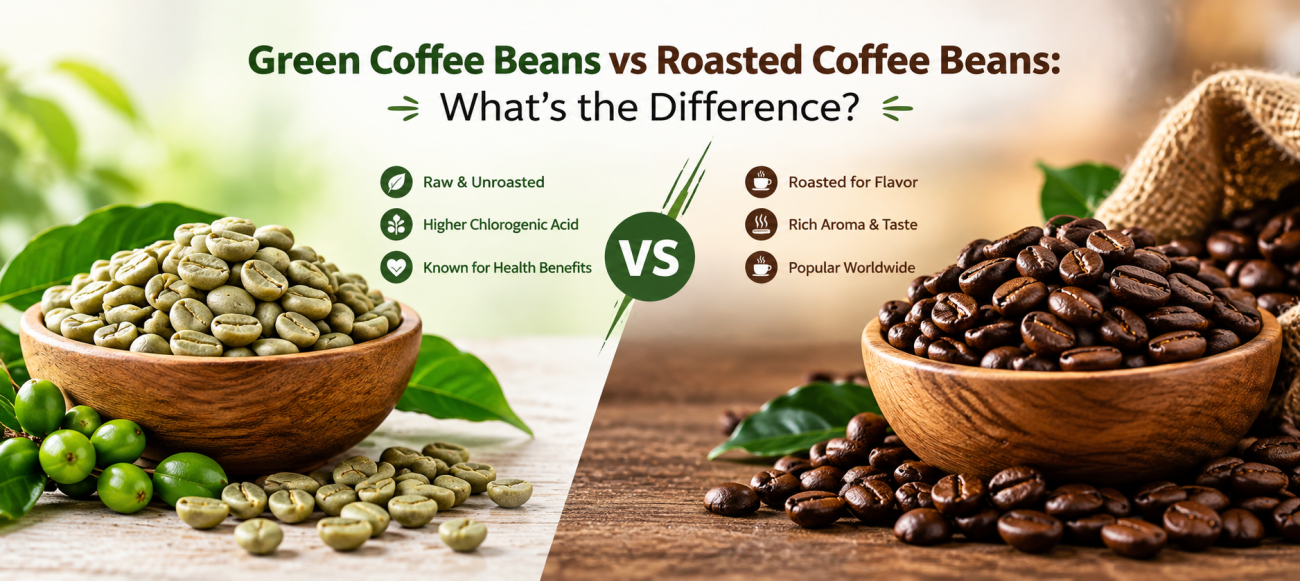
Coffee beans come in different forms depending on their processing stage and intended use. Green coffee beans are unroasted, while roasting transforms them into the brown, aromatic beans used for coffee preparation and further processing. This transformation influences the beans’ color, texture, flavor, aroma, caffeine content, and chemical composition. Understanding the differences between green and roasted coffee beans matters for roasters, beverage manufacturers, food businesses, and other buyers selecting coffee for specific applications.
What are Green Coffee Beans?
Green coffee beans are coffee seeds that have been processed and dried but not roasted. They are green to pale yellow and have a firmer structure than roasted beans. Before roasting, they contain naturally occurring compounds such as chlorogenic acids, caffeine, trigonelline, carbohydrates, and proteins. Their flavor is different from brewed coffee, with grassy, herbal, or astringent notes and little of the familiar roasted coffee aroma.
Green coffee, also referred to as raw coffee beans, is primarily used as the raw material for roasting. It can also be used in coffee extracts, functional beverages, and other food and beverage applications.
What Are Roasted Coffee Beans?
Roasted coffee beans are green coffee beans that have been subjected to carefully controlled heat to develop their characteristic color, aroma, flavor, and texture. During roasting, the beans lose moisture, expand, and undergo a series of physical and chemical transformations. Reactions such as the Maillard reaction and caramelization create complex flavor and aroma compounds that define the roasted coffee profile.
Several factors shape the finished beans, including coffee variety, origin, roasting temperature, roasting time, and roast level. Light, medium, and dark roasts can therefore produce distinct sensory profiles, even when prepared from the same green coffee beans.
Read More: Types of Coffee Beans in India
Green Coffee Beans vs Roasted Coffee: Key Differences
The simplest way to understand the difference is to look at what roasting changes.
Roasting changes the balance of naturally occurring compounds rather than simply removing them. Chlorogenic acids decrease with roasting, while heat-driven reactions form new compounds. Caffeine, meanwhile, is relatively stable compared with some other coffee compounds.
| Feature | Green Coffee Beans | Roasted Coffee Beans |
|---|---|---|
| Processing | Unroasted coffee seeds | Green beans processed through controlled heat |
| Color | Green to pale yellow | Light to dark brown |
| Texture | Dense and firm | More brittle and porous |
| Flavor | Herbal, grassy, and astringent | Roasted, aromatic, and more complex |
| Aroma | Relatively mild | Strong and characteristic of coffee |
| Chlorogenic acids | Generally higher | Reduced during roasting |
| Main use | Roasting, extracts, and ingredient applications | Brewing and further coffee processing |
How Are Green Coffee Beans Roasted?
Roasting is a controlled process designed to develop the desired coffee profile. Commercial roasters use equipment such as drum roasters, where heat transfers to the beans while they move continuously.
The process generally involves three broad stages:
- Drying: Heat removes moisture from the green beans.
- Roasting: Chemical reactions develop the bean’s color, aroma, and flavor.
- Cooling: The beans are cooled quickly to stop the roasting process at the desired point.
During roasting, beans expand and become lighter as they lose moisture. The degree of roasting influences acidity, bitterness, body, aroma, and other sensory characteristics.
A light roast may retain more of the coffee’s origin characteristics, while darker roasting can produce deeper, more intense flavors. The right profile ultimately depends on how you’ll use the coffee.
Choosing Between Green and Roasted Coffee Beans for Different Uses
The choice between green and roasted coffee beans depends on the processing stage, desired product characteristics, and intended end use.
Common Uses of Green Coffee Beans
Green coffee beans are useful when roasting or extraction will happen later in the production process. Common applications include:
- Commercial coffee roasting
- Green coffee extracts
- Functional beverages
- Dietary and wellness formulations
- Food and beverage ingredient applications
- Private-label coffee products requiring customized processing
For manufacturers and brands, green beans also offer flexibility because you can select a roasting profile to match the final product.
Common Uses of Roasted Coffee Beans
Roasted beans are ready for grinding and brewing, making them the standard starting point for many coffee beverages. They are commonly used for:
- Whole-bean coffee
- Ground coffee
- Espresso
- Coffee shops and food service
- Coffee extracts and concentrates
- Instant coffee production
For businesses sourcing coffee for these applications, the choice of bean format depends on whether roasting needs to be done in-house or the coffee is required in a ready-to-process form. Starlon Naturals supplies both green and roasted coffee formats, including Arabica and Robusta varieties. It sources green coffee beans from Indian coffee-growing regions and international origins, then cleans, grades, and sorts them before supply.
Related Read: Freeze-Dried vs Spray-Dried Coffee
Starlon Naturals: Green Coffee Bean Supply
For brands and businesses sourcing green coffee, consistency across batches matters as much as the bean itself. Starlon Naturals supplies unroasted green coffee beans in Arabica and Robusta varieties. Its process includes cleaning, grading, and sorting, and it includes origin documentation and quality certificates with shipments.
This makes green coffee a useful starting point for businesses developing roasted coffee, extracts, functional beverages, and other coffee-based products. You can then select the right bean type and specifications for the intended application.
Conclusion
Green and roasted coffee beans serve different purposes across the coffee supply chain. Green beans offer flexibility for roasting, extraction, and product development, while roasted beans are ready for brewing and further processing. The right choice depends on your application, processing requirements, and desired coffee profile. Starlon Naturals offers both green and roasted coffee beans in Arabica and Robusta varieties, supporting diverse B2B sourcing requirements. Explore its range as a coffee supplier to find the right format for your business.
Frequently Asked Questions
Can green coffee beans be used directly to make coffee?
You can process or extract them, but they don’t produce the familiar flavor and aroma associated with roasted coffee. Green beans are normally roasted before conventional coffee brewing.
Are green coffee beans healthier than roasted coffee beans?
It is not accurate to label one as universally healthier. Green beans generally contain more chlorogenic acids, while roasting creates other compounds that contribute to coffee’s flavor and chemical profile.
How long can green coffee beans be stored?
Storage life depends on moisture, temperature, packaging, and storage conditions. Keep green beans in a suitable dry environment to maintain quality.
How are green coffee beans converted into roasted coffee beans?
Roasting machines heat green beans under controlled conditions. The process removes moisture and triggers chemical reactions that develop the beans’ characteristic color, aroma, and flavor.
Which is better for commercial coffee production: green or roasted coffee beans?
It depends on the production stage. Green beans are suitable when a business wants to control roasting or use the beans as a raw material. Roasted beans are suitable when the roasting stage is already complete.
Can green coffee beans be roasted at home?
You can roast green coffee at home with suitable home roasting equipment. However, achieving a consistent roast requires control over temperature, timing, and cooling.

