
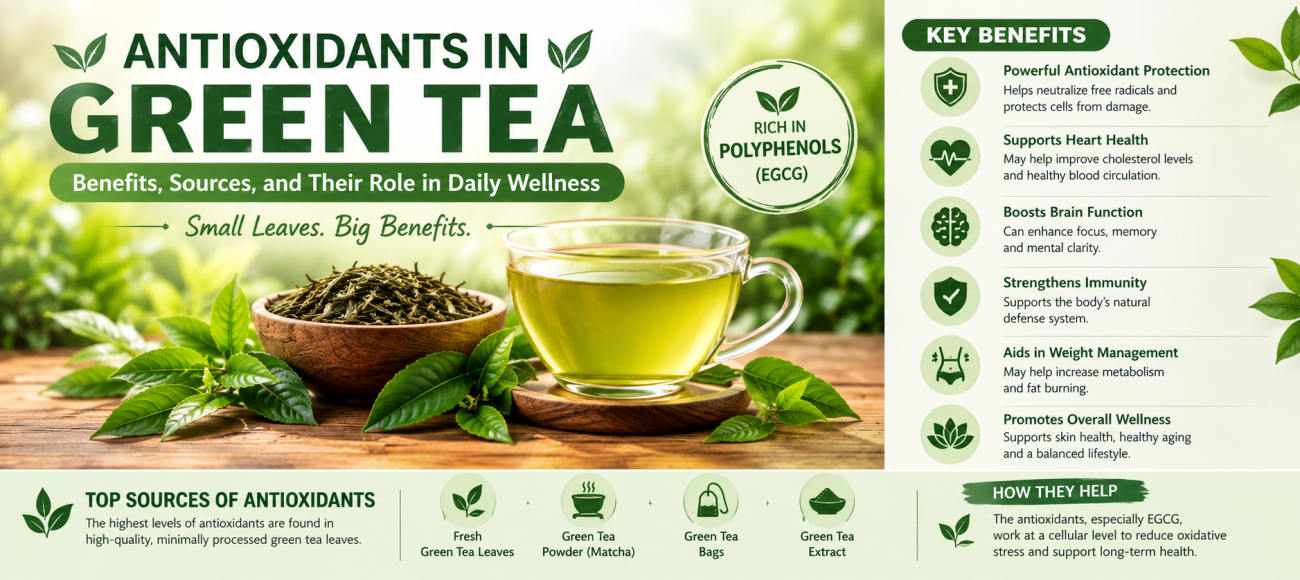
Green tea is valued for its distinctive flavor and naturally occurring plant compounds, particularly catechins, which are widely studied for their antioxidant activity. Among these, epigallocatechin gallate (EGCG) is one of the most researched. Factors such as tea variety, growing conditions, leaf quality, processing, and preparation influence the antioxidant profile of green tea. Understanding these factors helps consumers make informed choices and helps businesses work with a tea extract manufacturer to select suitable green tea and extract formats for beverage and ingredient applications.
What Are Antioxidants?
Antioxidants are compounds that can help counter oxidative processes involving reactive molecules in the body. Oxidative stress occurs when an imbalance between reactive molecules and the body’s antioxidant defenses occurs.
Antioxidants occur naturally in many foods and beverages, including fruits, vegetables, nuts, whole grains, coffee, and tea. Green tea is particularly known for its polyphenols, especially catechins. However, antioxidant activity does not automatically translate into a specific health outcome. Research into green tea and its potential health effects is still evolving.
What Makes Green Tea Rich in Antioxidants?
Green tea is minimally oxidized during processing, which helps retain many catechins naturally present in fresh tea leaves. These include epicatechin (EC), epigallocatechin (EGC), epicatechin gallate (ECG), and EGCG.
EGCG is particularly well studied for its antioxidant and other biological activities. Tea variety, growing conditions, leaf quality, processing, and preparation can all influence the final composition of a cup.
Read More: Green Tea Extract Benefits
Key Antioxidants Found in Green Tea
Green tea’s antioxidant profile is mainly associated with its catechins:
- EGCG: One of the most abundant and extensively studied green tea catechins.
- EGC: A naturally occurring catechin found in tea leaves.
- ECG: A gallated catechin present in green tea.
- EC: Another naturally occurring tea catechin.
Green tea also contains caffeine and amino acids such as L-theanine, which contribute to its overall chemical and sensory profile.
Benefits of Antioxidants in Green Tea
Antioxidants are widely studied for their potential role in daily wellness, but biological activity should not be presented as a guaranteed health benefit.
Supports Protection Against Oxidative Stress
Green tea catechins have antioxidant properties and can interact with reactive oxygen species. This is one reason researchers study them for their potential role in oxidative stress and cellular protection.
However, laboratory findings do not always translate directly into the same effects in humans. The body absorbs and metabolizes these compounds, which can affect their activity after consumption.
Supports Overall Wellness
Green tea provides naturally occurring polyphenols as part of the diet. Research has examined green tea consumption in areas including cardiovascular and metabolic health.
However, evidence is not strong enough to describe green tea as a treatment or guarantee a specific health outcome.
Supports a Balanced Daily Diet
Green tea can add plant-derived compounds to a varied diet. It should complement, rather than replace, a balanced eating pattern that includes fruits, vegetables, whole grains, legumes, nuts, and other nutrient-rich foods.
Sources of Antioxidants in Green Tea
Green tea’s primary antioxidant compounds come from naturally occurring polyphenols, particularly catechins. Their levels vary by tea plant, growing region, leaf grade, processing, and brewing conditions.
Processing matters because it influences catechin content and green tea’s overall antioxidant profile. Green tea undergoes limited oxidation, helping preserve catechins that can otherwise transform into other polyphenolic compounds during greater oxidation.
As a Green Tea supplier, Starlon Naturals offers whole-leaf, cut/broken, and dust grades for beverage, tea bag, blending, and other commercial applications. We are also a green tea extract supplier, offering instant green tea extract for formulations that require a convenient, concentrated source of green tea compounds.
Related Read: Green Tea Benefits
Green Tea vs Other Tea Types: Antioxidant Comparison
Green, black, white, and oolong teas all come from the Camellia sinensis plant. Their antioxidant profiles differ mainly because of how they’re processed.
| Tea type | Processing | Key polyphenol profile |
|---|---|---|
| Green tea | Minimally oxidized | Rich in catechins |
| Black tea | Fully oxidized | Contains theaflavins and thearubigins |
| Oolong tea | Partially oxidized | Intermediate polyphenol profile |
| White tea | Minimally processed | Contains naturally occurring catechins |
Different processing methods create different compounds, and each tea can fit into a varied diet.
Green Tea Extract vs Green Tea: What’s the Difference?
Green tea and green tea extract come from the same plant but differ in format, concentration, and intended use.
| Product | Description | Common applications |
|---|---|---|
| Green tea | Processed tea leaves brewed with water; available as whole leaf, cut/broken grades, or dust | Ready-to-drink beverages, tea bags, and loose-leaf tea |
| Green tea extract | Concentrated ingredient produced by extracting compounds from green tea | Beverages, premixes, supplements, and other formulations |
Conclusion
Green tea is a natural source of catechins such as EGCG, which contribute to its antioxidant profile. Factors including origin, leaf grade, processing, and preparation can influence the levels of these compounds. For businesses seeking consistent ingredients, Starlon Naturals works as a green tea extract manufacturer supplying green tea in multiple grades and green tea extract formats for beverage and other applications. Discover green tea and extract formats from Starlon Naturals, designed to meet diverse beverage and ingredient requirements.
FAQs
Is green tea high in antioxidants?
Green tea is a notable source of catechins, a group of polyphenols with antioxidant activity. Levels vary based on tea type, origin, processing, and preparation.
What is EGCG in green tea?
EGCG stands for epigallocatechin gallate. It is one of the major catechins in green tea and one of its most extensively studied compounds.
Does green tea contain more antioxidants than black tea?
Green tea generally retains more catechins because it undergoes less oxidation. Black tea processing converts many catechins into other compounds, including theaflavins and thearubigins.
How much green tea can you drink in a day?
Green tea contains caffeine, so consider individual sensitivity and total caffeine intake.
Does processing affect antioxidants in green tea?
Processing can affect the concentration and composition of tea polyphenols. Green tea’s minimal oxidation helps preserve many catechins naturally present in the leaves.
What is the difference between green tea and green tea extract?
Green tea is the processed leaf used to prepare a beverage. Green tea extract is a concentrated ingredient produced by extracting compounds from green tea.

