

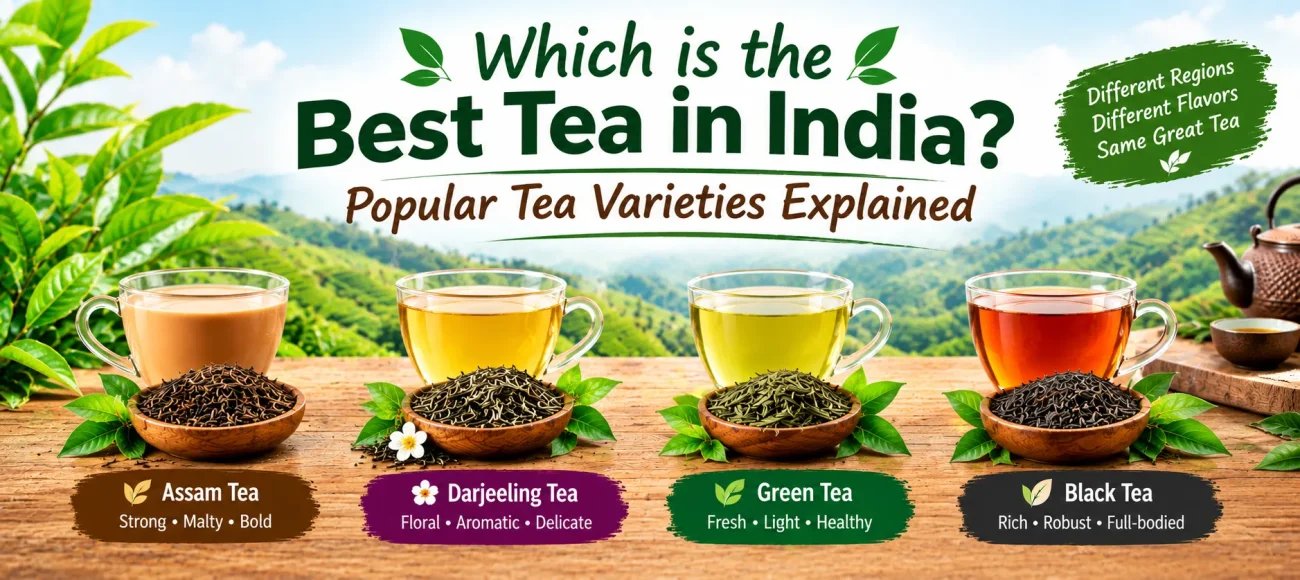
India is one of the world’s well-known tea-producing regions, offering a diverse range of teas shaped by geography, climate, cultivation practices, and processing methods. From the bold, malty character of Assam tea to the delicate, aromatic profile of Darjeeling and the fresh notes of green tea, each variety offers distinct characteristics. As a result, choosing the best tea in India depends on individual taste, intended application, and brewing preferences. Understanding these differences can help consumers and businesses select the right tea for their requirements.
What Makes Tea the Best?
The best tea is a matter of personal preference and the experience you enjoy most. Some people appreciate a strong, full-bodied cup, while others prefer delicate floral notes or a lighter, refreshing flavor.
A few factors can help you judge tea quality and suitability:
- Taste: Look for a profile that matches your preference, such as malty, brisk, floral, fruity, earthy, or vegetal.
- Aroma: Fresh, distinct aromas can enhance the drinking experience.
- Origin: Region, climate, altitude, soil, and processing can influence the tea’s character.
- Leaf quality: Leaf size and grade can affect brewing and the final cup.
- Processing: Oxidation and processing methods shape the tea’s flavor and appearance.
- Freshness: Proper handling and storage help preserve aroma and flavor.
The best choice is ultimately the tea that consistently delivers the taste and experience you want.
Popular Tea Varieties in India
India produces several distinctive tea varieties, including Assam, Darjeeling, Nilgiri, green tea, and specialty blends.
Darjeeling Tea
Darjeeling tea comes from the Darjeeling district of West Bengal, in the foothills of the Himalayas. Its high-altitude growing conditions give it a distinctive character, with delicate aromas, floral and fruity notes, and the characteristic muscatel profile associated with many Darjeeling teas. Produced using Orthodox processing, it retains more of the leaf structure and develops a layered flavor, making it a good choice if you prefer a refined, aromatic cup.
Read More: Black Tea Benefits
Assam Tea
Assam tea comes from northeastern India and is known for its full-bodied character and pronounced malty notes. It generally produces a stronger liquor than Darjeeling tea, making it popular for breakfast blends and milk tea. Available in CTC and Orthodox grades, Assam tea suits a range of applications. CTC tea is commonly used for tea bags, blends, and chai, while Orthodox tea retains more leaf structure. Its bold character also pairs well with milk and sugar.
Green Tea
Green tea is minimally oxidized compared with black tea, which helps it retain its fresh, vegetal character. Indian green tea can range from delicate and grassy to more robust and aromatic, depending on its origin and processing. Varieties from Darjeeling, Assam, Nilgiri, and Kangra Valley each offer a distinct profile, and a Green Tea supplier can provide these as graded leaf for blending and packing. Green tea can suit people who prefer a lighter, cleaner cup.
Black Tea
Black tea is fully oxidized, resulting in a deeper color and more developed flavor profile. Indian black teas can range from brisk and bright to rich and malty, depending on their origin and processing. Assam, Darjeeling, Dooars, and Nilgiri are among the Indian origins used for black tea. Nilgiri black tea is known for its bright liquor, brisk character, and clean aromatic finish. Sourced through a Black Tea supplier, black tea also works well for hot tea, iced tea, blends, and foodservice applications.
At Starlon Naturals, we focus on sustainable and ethical sourcing across our tea, coffee, and extract supply chain, including our approach to tea farming in India. Our Sustainable Future 2030 strategy aims for 100% sustainable and ethical sourcing across these categories by 2030.
Loose Leaf Tea vs Tea Bags: Which Is Better?
Loose-leaf tea and tea bags each offer different advantages. The better option depends on your brewing preferences, convenience needs, and desired tea experience.
| Feature | Loose-Leaf Tea | Tea Bags |
|---|---|---|
| Brewing control | Adjust strength and quantity | Pre-portioned and convenient |
| Leaf size | Often larger leaves | Usually smaller grades |
| Flavor | Fuller, more layered | Quick, consistent cup |
| Convenience | Needs measuring and an infuser | Easy with minimal cleanup |
| Best for | Exploring tea quality and brewing | Everyday use and travel |
| Overall | More control and flexibility | More convenience and consistency |
How to Identify High-Quality Tea
When choosing tea, look beyond the leaves’ appearance. Consider:
- Origin: The growing region can influence flavor, aroma, and character.
- Grade: Leaf size and grade can affect brewing performance.
- Processing: The processing method shapes flavor, aroma, and appearance.
- Freshness: Quality tea should have a clear, characteristic aroma.
- Storage: Proper storage helps protect tea from moisture, heat, light, and unwanted odors.
- Brewing quality: A good tea should have a clear, balanced flavor rather than tasting flat or excessively bitter.
- Quality standards: For commercial buyers evaluating a Tea supplier in India, certifications, traceability, and consistent specifications can provide additional assurance.
India produces several distinctive tea varieties, including Assam, Darjeeling, Nilgiri, green tea, and specialty blends.
Related Read: Chicory Root Benefits
Choosing the Right Tea for Different Occasions
Different tea varieties offer distinct flavor profiles and brewing characteristics, making some better suited to particular occasions, preferences, and consumption formats.
- Morning: Assam black tea for a strong, full-bodied cup.
- Afternoon: Darjeeling for a lighter, aromatic experience.
- After meals: Green tea for a lighter alternative to black tea.
- Hot weather: Nilgiri black tea for iced tea.
- Relaxed brewing: Specialty or loose-leaf teas for distinctive flavors.
- Everyday convenience: Tea bags for quick preparation.
At Starlon Naturals, we supply black tea, green tea, Darjeeling tea, and specialty blends to suit different preferences and applications. The best tea fits your routine while delivering a flavor profile you genuinely enjoy.
Conclusion
India’s diverse tea-growing regions offer a wide selection of teas, each distinguished by its origin, processing method, flavor, and aroma. From robust Assam and delicate Darjeeling to refreshing green tea and aromatic Nilgiri varieties, the right choice depends on the desired profile and application. Looking for quality tea solutions for your business? Connect with Starlon Naturals, a tea manufacturer in India, to explore its range of tea products and sourcing capabilities.
FAQs
1. Which is the best tea in India?
Different teas suit different preferences and occasions. Assam, Darjeeling, green, Nilgiri, and specialty teas each offer distinctive qualities.
2. Is Darjeeling tea better than Assam tea?
Neither is universally better. Darjeeling is generally more delicate and aromatic, while Assam tends to be fuller-bodied and maltier.
3. Which tea is best for daily consumption?
The best daily tea depends on your taste, caffeine tolerance, and drinking habits. Assam, Darjeeling, green, and Nilgiri teas can all fit different routines.
4. What are the main types of tea available in India?
Common types include black tea, green tea, specialty teas, and regional varieties such as Assam, Darjeeling, and Nilgiri tea.
5. How can I identify high-quality tea leaves?
Check the tea’s origin, grade, aroma, appearance, freshness, and processing. For commercial tea, traceability and quality certifications can also help assess the supplier.

