

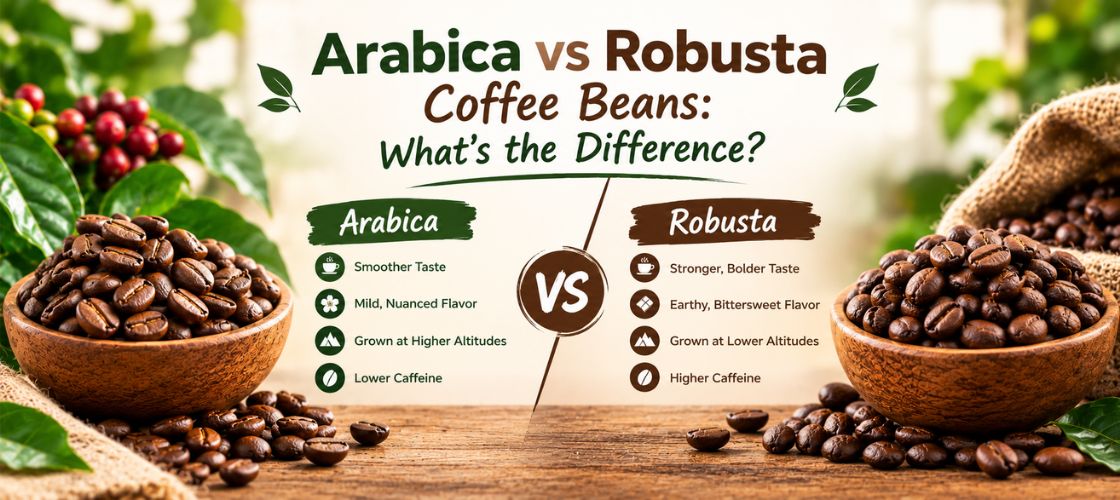
What makes one coffee taste smooth and aromatic while another feels stronger and more full-bodied? The answer often comes down to the type of coffee bean used. Arabica and Robusta are two of the most widely used coffee varieties, but they differ in flavor, aroma, caffeine content, bean structure, and growing conditions. Knowing these differences is useful when choosing beans for brewing, blends, instant coffee, or other beverage applications. This comparison of Arabica vs. Robusta coffee beans explores what sets them apart.
What Are Arabica Coffee Beans?
Arabica coffee beans come from Coffea arabica. They are associated with a smoother flavor profile, higher acidity, and greater aromatic complexity. Arabica beans are commonly used in specialty and premium coffee products.
Their characteristics include:
- Flavor: Smooth, sweet, and nuanced.
- Acidity: More noticeable acidity than Robusta.
- Aroma: Complex and pronounced.
- Bean shape: Generally oval with a curved center line.
- Applications: Roasted coffee, ground coffee, specialty blends, and ready-to-drink beverages.
These characteristics make Arabica suitable for products where flavor and aroma are central to the coffee experience.
What Are Robusta Coffee Beans?
Robusta coffee beans come from Coffea canephora. They are known for a stronger, more bitter flavor and higher caffeine content than Arabica. Robusta also contributes body and crema to certain coffee preparations.
Key characteristics include:
- Flavor: Strong, earthy, and bitter.
- Caffeine: Higher than Arabica.
- Body: Fuller and heavier.
- Bean shape: Generally rounder than Arabica.
- Applications: Espresso blends, instant coffee, roasted coffee, and commercial blends.
Robusta is useful when manufacturers need a stronger coffee character, higher caffeine content, or added body. As a Black Tea exporter and coffee ingredient supplier, Starlon Naturals supports these requirements across coffee and tea-based products.
Arabica vs Robusta: Key Differences
The main difference between Arabica and Robusta lies in their flavor, caffeine content, physical characteristics, and growing requirements.
| Factor | Arabica | Robusta |
|---|---|---|
| Flavor | Smooth, sweet, nuanced | Strong, earthy, bitter |
| Acidity | Higher | Lower |
| Caffeine | Lower | Higher |
| Body | Lighter | Fuller |
| Aroma | More complex | Strong and distinctive |
| Bean shape | Oval | Rounder |
| Growing conditions | Cooler, higher elevations | Warmer, lower elevations |
| Common uses | Specialty and roasted coffee | Instant coffee, espresso, and blends |
The choice depends on the flavor, strength, caffeine, and application requirements of the finished product.
How Are Arabica and Robusta Processed?
Arabica and Robusta follow similar broad processing stages after harvesting, although specific methods can vary by origin and producer.
The general process includes:
- Harvesting: Ripe coffee cherries are collected.
- Processing: The fruit is removed using a wet or dry processing method.
- Drying: The processed beans are dried to the required moisture level.
- Sorting: Beans are graded and separated based on quality and specifications.
- Roasting: Heat develops the desired color, aroma, and flavor.
- Grinding or further processing: Roasted beans can be ground or converted into products such as instant coffee or extracts.
Processing and roasting conditions have a major effect on the final coffee profile.
Arabica vs Robusta: Which One Is Used for What?
Arabica and Robusta can serve different purposes in commercial coffee products. The choice depends on the desired sensory profile, caffeine level, body, and production format.
Common Uses of Arabica Coffee Beans
Arabica is used in:
- Roasted coffee
- Ground coffee
- Specialty coffee products
- Ready-to-drink coffee
- Premium coffee blends
These applications make use of Arabica’s flavor and aromatic characteristics.
Common Uses of Robusta Coffee Beans
Robusta is commonly used in:
- Instant coffee
- Espresso blends
- Roasted coffee
- Commercial coffee blends
- Coffee-based beverages
Its stronger flavor and fuller body can support products that require a more pronounced coffee profile.
Uses of Arabica and Robusta Coffee Blends
Combining both varieties allows manufacturers to create a specific balance of flavor, body, aroma, and caffeine.
- Espresso blends
- Instant coffee blends
- Ground coffee
- Ready-to-drink beverages
- Custom coffee formulations
The ratio can be adjusted according to the desired characteristics of the finished product.
How to Choose Between Arabica and Robusta Coffee Beans
The right coffee bean depends on the product requirements and intended application.
- Flavor: Choose Arabica for a smoother profile or Robusta for a stronger character.
- Caffeine: Consider the caffeine requirement of the finished product.
- Body: Robusta can contribute a greater body to a blend.
- Application: Match the bean to roasted, instant, espresso, or beverage formats.
- Blend requirements: Consider whether combining both varieties can achieve the desired profile.
- Processing: Review the roasting and processing requirements for the selected bean.
Defining these requirements helps businesses select the right coffee variety or blend.
Arabica and Robusta Coffee Ingredient Solutions by Starlon Naturals
Starlon Naturals is an instant coffee producer supplying coffee ingredients for B2B applications, including roasted coffee beans, instant coffee, coffee extracts, and beverage premixes.
- Coffee options: Ingredients suited to different commercial coffee applications.
- Custom development: Custom blend development tailored for beverage and food service applications.
- Batch consistency: Consistent high-yield flavor extracts and standardized batch stability.
- Commercial supply: Solutions for beverage brands, cafés, retailers, and food service businesses.
- Product flexibility: Formats designed for different processing and formulation requirements.
Its consistent high-yield flavor extracts and standardized batch stability support businesses working with defined product specifications. Custom blend development can also help meet specific beverage and food service requirements.
Conclusion
Arabica and Robusta differ in flavor, aroma, caffeine content, body, bean characteristics, and growing conditions. Arabica is associated with smoother, more nuanced profiles, while Robusta offers stronger flavor, higher caffeine, and fuller body. Both varieties have distinct commercial applications and can also be blended to create a specific coffee profile. Businesses can select between them based on flavor, caffeine, processing requirements, product format, and intended application.
FAQs
1. Which is stronger, Arabica or Robusta?
Robusta generally provides a stronger and more bitter flavor profile, along with higher caffeine content.
2. Which has more caffeine, Arabica or Robusta?
Robusta coffee beans generally contain more caffeine than Arabica beans.
3. Is Arabica coffee smoother than Robusta?
Arabica is generally associated with a smoother and more nuanced flavor, while Robusta has a stronger and more earthy profile.
4. What is the difference between Arabica coffee vs Robusta coffee in taste?
Arabica tends to be smoother and sweeter with more noticeable acidity. Robusta tends to be stronger, earthier, and more bitter.
5. Can Arabica and Robusta beans be blended together?
They can be blended to create a desired balance of flavor, body, aroma, and caffeine.
6. Which coffee bean is commonly used for instant coffee?
Robusta is widely used in instant coffee formulations, although Arabica and blends can also be used.
7. How can businesses choose the right coffee bean for their products?
Businesses should consider flavor, caffeine, body, processing requirements, product format, blend ratio, and the intended application.
